
How to prevent your cosmetic color from fading
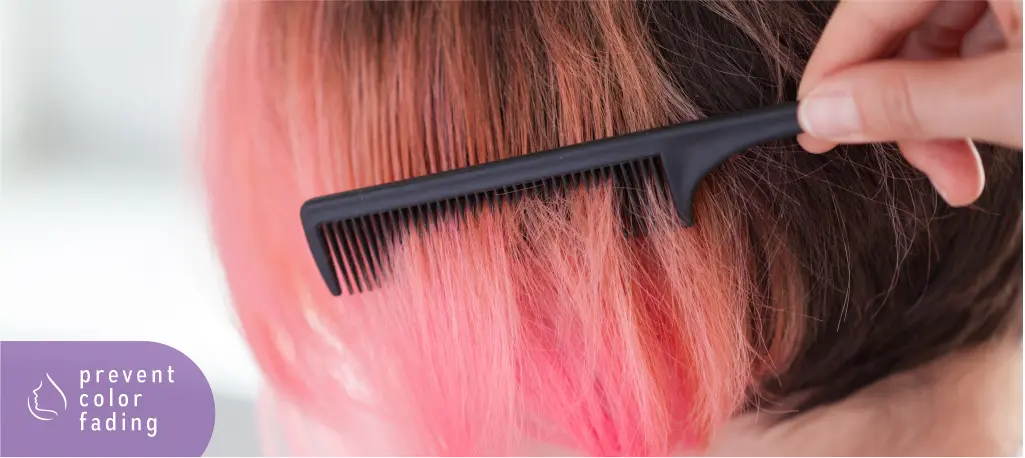
What causes colour loss? Here are the biggest culprits:
Bad shampoo
The absolute, number one reason for colour fading, is low quality shampoo. They contain sulfates that are added to the shampoo to obtain proper cleaning, but it would be like washing your hair with Sunlight Liquid. Research has shown that sulfates are not necessary to get clean, oil-free hair. Rather opt for a sulfate free shampoo or a shampoo without the harshest two types of sulfates, namely Sodium Lauryl Sulfate (SLS) or Sodium Laureth Sulfate (SLES).
It is recommended to use a shampoo specifically designed to preserve or enhance the cosmetic colour. Colour-safe products don’t contain alcohol, have low sulfate levels and often contain extra moisturizing elements, emollients and proteins to smooth the cuticle, giving hair luster and shine.
Over-shampooing
Over shampooing is another common reason for colour fading. Not only will it fade your colour but it is extremely bad for the health of the hair. Unless you have extremely oily scalp or use products that leave a heavy residue on the hair, you do not have to shampoo every day. Every 2-3 days is quite sufficient. If you can stretch it any more, even better. To help you with the stretch, we recommend you use a Dry Shampoo that you could use in-between washes to keep the dirt at bay.
Heat styling tools
Styling with heat is another colour fading culprit. Those flat irons we all love so much are doing a number not only on the health of your hair but even more on the cosmetic colour. Heat damages the cuticle and exposes the cortex, allowing pigments to slip out. Use a heat protectant spray or a leave-in treatment. We recommend the StyleIN range of products as most of the products in the range, contain NutriShield thermal protection.
The Sun
We all know the damage that the harmful UV rays in sunlight can do to our skin. Our hair is even more exposed as it faces the harmful rays “head-on”. Cover up with a hat or scarf or if you do not want your beautiful mane to be hidden away, at least use a product with a good UV filter. Studies show that having a UV filter in a hair care product can reduce colour fading by up to 40%. Look for products containing ingredients like Benzyl Salicylate or Panthenol. Most leave-in conditioners and serums contain a UV filter. The Inebrya Argan Age range is specifically formulated for UV protection. Choose between a leave-in conditioning spray, Hair serum or Frizz free spray to add UV protection to your hair care routine.
Fluorescent lighting
Yes, those lights you sit under all day at work will fade your hair colour as it also contains harmful UV rays. Using a product with UV protection will combat the colour loss.
Chlorine
Chemicals in your water, such as chlorine, will also fade your hair colour. Chlorine is highly alkaline and will open the hair cuticle, exposing the cortex and allowing cosmetic colour to seep out. In such a case it is necessary to use a chelating shampoo to remove any chlorine residues, pair with a conditioner with a very low pH to properly seal the cuticle. Look for shampoos that contain Sodium Gluconate, as it is one of the most effective chelating ingredients. We recommend any of the following shampoos:
Chelating agents are compounds that limit water hardness, i.e. the activity of the metal ions, contained in water. Calcium and magnesium are the main ones, but there are also chlorine, sulphates, copper and lead.
Wind
Everyone enjoys a crisp, fall breeze, but are we prepared for the colour fading that comes with it? Much like washing your hair, high winds and drier temperatures can be especially damaging if your hair isn’t properly prepped for the day. Before heading out, lightly mist your hair down and apply a moisturizing serum to your lengths and ends.
Poor color service
If you colour your hair at home with box colour or if an un-qualified person performs the colour service for you, you could be faced with major problems:
- Improper consideration of hair porosity: Prior to colouring, it’s important to determine the health of the hair. Damaged hair is very porous which means that it will grab the colour quickly and as a result would come out darker than you anticipated. Also, porous hair will lose the cosmetic pigments quicker, thus faster colour fading. For optimum colour results hair needs to be in a healthy condition. So if you want your colour to last a protein or moisturizing treatment may be needed before you colour. This will help “fill in” empty spaces in the hair and give the colour molecules a better anchor point, resulting in longer colour results.
- Poor quality pigments: In order to save cost and make products financially viable, manufacturers sometimes need to compensate on the quality of the ingredients. So they substitute pure pigments with metals and/or PpD. But if you use poor quality pigments you cannot expect high quality cosmetic colour. And if your cosmetic colour is poor to begin with, you cannot really expect it to last.
- Insufficient processing time: A common reason behind fast-fading hair colour is insufficient processing time, meaning the hair colour did not stay on long enough. This especially holds true if you or your client have grey hair. Grey hair cuticles are tightly packed down, and take longer to open and absorb artificial hair colour molecules. The box does not clearly specify what to do in cases like these and you might not get the result that you were looking for.
Moral of the story: Get a professional to perform the colour service. That is what they are trained to do.
Shampooing too soon after a color service
Remember to wait at least 24 hours after a colour service before washing your hair. Shampoo has an alkaline pH which will open the cuticle, and you want to keep it closed for as long as possible. You can also supplement with a leave-in conditioning spray that can be sprayed on dry hair throughout the day, to add moisture and to keep the pH as low as possible.